

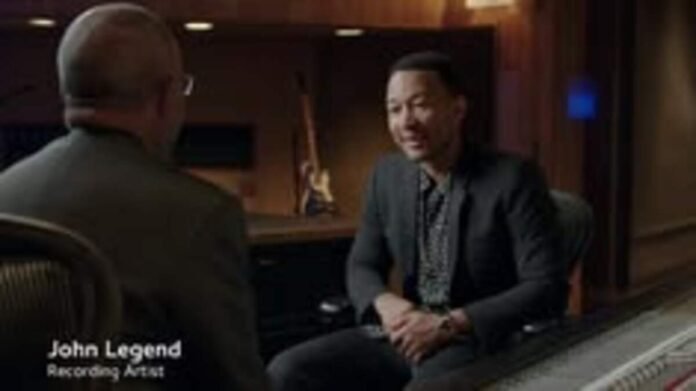


Legend is filling a deeply significant slot in his career. The EGOT winner has been selected to portray the beloved Harry Belafonte in Bill Condon’s new musical drama The Road Home, a take on the volatile political and cultural battles conjured by Paul Simon’s groundbreaking 1986 record Graceland. Filming has begun in South Africa, and the project is adding to Hollywood’s excitement of Legend in more than one way. Belafonte was so much more than a singer. He was an icon in the worlds of showbusiness and justice, a man whose life embodied the society and he lived it to the full.
Legend was careful to stress that he was a man, a friend, a mentor, a compatriot in the half-century struggle for justice, freedom and equality. Legend passionately sang in a tribute that did not feel at all like a pre-prepared public relations speech about Belafonte, “a truly extraordinary human being who lived a revolutionary life. He’s the last word in the life of an artist and an activist. He’s the man everyone else tries to emulate. It’s a wonderful honor to play his role.
” The Road Home focuses on Hugh Masekela, the South African trumpeter who is now dead (most definitely in the film), played here by Thabo Rametsi. It tracks how Masekela was torn between loyalties during South Africa’s last few years of apartheid. On one hand, his mentor and protector, fellow South African Archbishop Trevor Huddleston, (Guy Pearce) who fought to have a cultural boycott to deprivehim of his music played against Masekela’s belief that the power of music could oppose and highlight the injustices within South Africa. Here we see Miriam Makeba, who was the legendary singer, Mama Africa as played by Cynthia Erivo. And Johnny Flynn plays Paul Simon The Harry Belafonte part of this history was real, and complicated.
He had been a longtime supporter of Masekela and Makeba, helping to fund the young trumpeter’s studies abroad and even sharing a Grammy with Makeba for their joint album. When Simon was about to record with South African artists, Belafonte convinced him to consult anti-Apartheid sources. Despite the caution, the Grammy-winning album and tour was fiercely debatedsupporters claimed that Graceland was a breakthrough in exposing global audiences to township music and the voices of Black South African artists; detractors believed Graceland violated the United Nations cultural boycott and would ultimately serve to legitimize the apartheid government.
Condon, who has an Oscar for the film Gods and Monsters and has directed Chicago, is constructing a film that explores the complex intersections of art and politics, friendship and ideology. His film is neither a traditional biography of any of its characters nor a conventional portrait of a time when music was simultaneously a connection and a point of contention.