

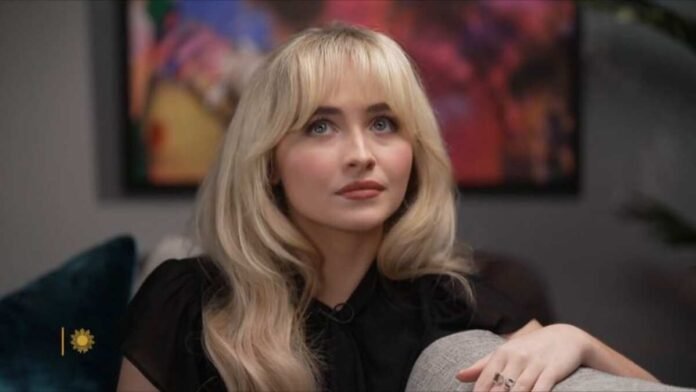


Sabrina Carpenter has sparked a major cultural and political conversation after publicly criticizing the White House for using her music in a political video without her consent. The pop star called the move “evil and disgusting,” making it clear that she does not want her art associated with political messaging she did not approve. The incident has reignited debates around artist rights, music licensing, and the ethical use of creative work in politics.
The controversy began when a short political video shared from an official White House social media account featured one of Carpenter’s songs in the background. While the video was quickly noticed by fans, it was Carpenter’s reaction that turned the moment into global entertainment news. Responding directly on social media, she condemned the usage, stating that her music was never meant to be used to promote political narratives or agendas.
Carpenter’s response was blunt and emotionally charged, reflecting growing frustration among artists who feel their work is often pulled into political spaces without permission. She emphasized that music is deeply personal and that attaching it to political content can misrepresent an artist’s values and beliefs. For Carpenter, the issue was not just legal but moral, as she felt her voice and identity were being used without her approval.
This is not the first time musicians have objected to political entities using their songs. Over the years, several high-profile artists have spoken out after discovering their music featured at rallies, campaigns, or government-backed media. However, Carpenter’s case stands out because it involves a direct association with the White House rather than a campaign event, raising fresh questions about boundaries between state communication and pop culture.
From a legal perspective, political organizations often rely on broad licensing agreements that allow the use of commercially released music on digital platforms. Still, artists argue that legality does not equal ethical responsibility. Carpenter’s strong language reflects a wider sentiment in the music industry that creators should have greater control over how their work is contextualized, especially in politically sensitive environments.
Fans were quick to rally behind Carpenter, praising her for speaking up and setting boundaries. Many supporters shared her statements widely, applauding her willingness to challenge powerful institutions. At the same time, the incident fueled debate online, with some arguing that public music inevitably becomes part of public discourse, while others insisted that consent should always come first.
The White House has not issued a detailed response addressing Carpenter’s criticism directly, but the backlash has already made an impact. The video in question reportedly saw reduced visibility following the controversy, and the situation has drawn attention to internal vetting processes for official digital content.
For Sabrina Carpenter, the moment represents more than a viral headline. It underscores her evolving public image as an artist who is unafraid to defend her creative autonomy. Known primarily for her chart success and acting career, she is now also being recognized for taking a clear stand on how her work is used and interpreted.
In a media landscape where music, politics, and social platforms increasingly overlap, Carpenter’s reaction highlights a growing tension. Artists today are not just entertainers; they are brands, voices, and cultural influencers. When their work is used without permission, especially by political institutions, the fallout can be swift and loud.
The incident serves as a reminder that creative expression carries meaning beyond sound and visuals. As artists like Sabrina Carpenter continue to speak out, the conversation around consent, ethics, and respect in political communication is likely to grow louder, shaping how music and power intersect in the digital age.