

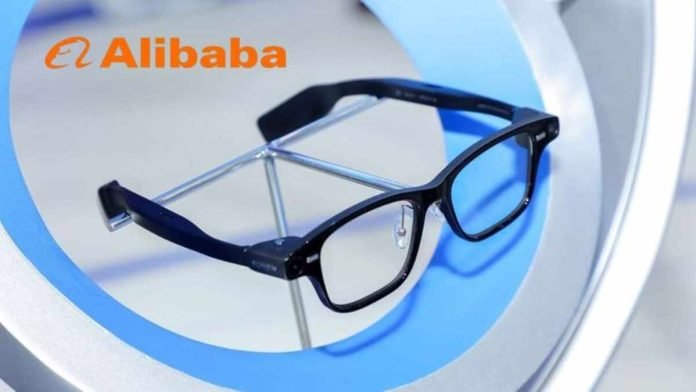


Alibaba has officially thrown its hat into the smart-glasses ring with the surprise unveiling of Quark AI Glasses, a lightweight, AI-first wearable that launches exclusively in China this week and immediately positions the e-commerce giant as a serious threat to Meta’s Ray-Ban Stories, Apple’s rumored Vision Lite, and Xiaomi’s established Mi Glasses lineup.
Priced aggressively at ¥1,999 (roughly $280) for the base model and ¥2,999 for the premium carbon-fiber edition, Quark Glasses undercut most Western competitors by 40-60% while packing features that feel years ahead of current market leaders. At just 38 grams, the frames house dual 12-megapixel cameras, open-ear directional audio, a custom 6nm Quark AI chip, and an always-on large language model that runs entirely offline—no cloud latency, no privacy compromises.
The killer feature is real-time multimodal translation: point at a street sign, menu, or conversation partner and instantly see subtitles projected onto the lenses in your chosen language, with support for 28 languages at launch including Mandarin, English, Spanish, Arabic, and Hindi. Live navigation overlays turn the world into an AR heads-up display, while gesture controls and voice commands powered by Alibaba’s Qwen-2.5 model let users shop, message, or summon ride-hailing without ever touching a phone.
Battery life stretches to 12 hours of mixed use or 36 hours of pure audio playback, thanks to a micro-projector system that sips power compared to waveguide-heavy rivals. The glasses pair seamlessly with Alibaba’s ecosystem—Tmall, Taobao, Alipay, and DingTalk—meaning users can scan a physical product on the street and be taken straight to the lowest-priced listing, complete with user reviews floating in their field of view.
Early hands-on reports from Chinese tech media praise the seamless integration and near-zero learning curve. “It feels like the smartphone just disappeared from my hand and reappeared on my face,” wrote veteran reviewer Ben Sin for Sina Tech. The offline AI is particularly impressive: the device can summarize meetings, translate speech in real time even on airplanes, and identify objects with 98% accuracy according to internal benchmarks.
Alibaba isn’t hiding its global ambitions. During the Shanghai launch event, Quark division head Jing Ren stated bluntly, “We believe AI glasses will replace smartphones for daily tasks within five years. China will lead that transition, and Quark will power it.” Export versions with Google Gemini integration and Western app compatibility are already in testing, with rumors pointing to a CES 2026 reveal.
The timing couldn’t be sharper. Meta’s Orion holographic glasses remain prototype-only and cost tens of thousands to produce, Apple’s entry is still vaporware, and Google quietly shelved its latest Iris project. Meanwhile, Xiaomi and Huawei dominate domestically but lack Alibaba’s AI muscle and merchant network. By bundling the glasses with a free year of Tmall Genie Premium and deep discounts for Super Brand Day shoppers, Alibaba is betting millions will adopt Quark as their first wearable before international rivals even ship.
Privacy concerns, a perennial smart-glasses hurdle, are being addressed head-on: all processing happens on-device, footage is never stored without explicit consent, and a physical LED “recording” indicator glows red whenever cameras activate—features missing from many competitors.
Pre-orders crashed Alibaba’s servers within minutes of going live, with the first 200,000 units selling out in under eight minutes. Factory partners are reportedly ramping to 1.5 million units per month by Q2 2026.
For the first time since the smartphone wars began, a Chinese tech giant has launched a consumer hardware product that feels genuinely ahead of Silicon Valley—and at a price point the West simply can’t match. If Quark Glasses deliver on their day-to-day promises, 2026 could mark the moment Alibaba rewrote the rules of personal computing all over again, one pair of frames at a time.